Articles by "Automobile"
Showing posts with label Automobile. Show all posts
Tech Touchz is a Network about Hacker News, Tech News &Tech Hacks - Latest &Tech News, Hacker News and Hacking Tricks About Technology

Awesome! Check Out The New 2017 Porsche Panamera

There's no getting around the fact that the old Panamera was a hippo of a thing. It wasn't pretty at all. In its many guises it was very fast, very efficient and very...Porsche, but to accuse it of beauty would be doing the word a disservice.

2017 Porsche Panamera


Other than the look, very little needed improving, but Porsche has decided to make the whole thing better anyway. A quick chat with Dr. Gernot Doellner, head of all things Panamera, revealed some things we knew, and a couple that we didn't.


It's all-new

The new Panamera is all new, all the time. From the base components to the exterior, there's nary a hint of old Panamera in there. Well, aside from one thing: Dr. Doellner and team know the concept is pretty perfect. Four big seats in a big car to go big distances (presumably to make big decisions about big business). As such, it's new, but still kind of familiar.

It brings the pretty

C'mon, they had to make it prettier. There's no way it could have gotten much worse, right? Porsche's aim here was to bring its silhouette closer in line with the 911 -- one of the most recognizable profiles in the automotive world. Even though the new car is bigger than the old in every dimension, it looks smaller than the old car. And it's much better looking -- smoother, sleeker, better.


Man, it's fast

The Turbo S will lap the Nurburgring in 7:38, which is faster than a Mercedes-McLaren SLR. It managed the run on normal road tires, too. The Turbo does come with 550 horses and a 4.0-liter, twin-turbocharge V-8 that'll hurl it from 0-60mph in just 3.4 seconds, so if it was slow it'd be a heck of a surprise. There are other models coming out at launch, as well: The 4S for the US and a diesel model for Europe. They're both pretty perky too.

Technology is king
The inside is suspiciously buttonless. It's bizarre, considering how many of the things blight the first-generation car, but it's all about touch-panel tomfoolery now. That's an advantage for two reasons: One, no blank plates to show your friends that you're a bit cheap; two, you can do a lot more with the space. It also looks super cool. With the features on offer in the new car, Dr. Doellner said that traditional buttons would have swamped the cabin and been impractical. Now, they don't need to worry about it.

Darkness isn't a problem any more, either, as the new car can see in the dark, pick out possible hazards and alert the driver to their presence.

Its lights are smart, as well. For non-US models, there's an LED matrix setup that can selectively light bits of the road for you. It can sense an oncoming car, make sure the relevant parts of the light don't dazzle the other driver but keep as much of it lit as possible. Smart stuff. And, of course, it'll be stuffed with more safety tech than you can shake a stick at.


It's built in the same place as the Carrera GT

Porsche's Leipzig factory is pretty sweet. There's a museum full of Porsche's greatest cars, a super clean (and super new) building designed just for bolting the Panamera together, a test track with a replica of Laguna Seca's corkscrew turn and a pretty well-stocked gift shop. Most importantly: They used to build the Carrera GT there.
Tech Touchz is a Network about Hacker News, Tech News &Tech Hacks - Latest &Tech News, Hacker News and Hacking Tricks About Technology

Ford's rolling out an all-new Super Duty line of heavy-duty pickups this year

2017 Ford F-Series
2017 Ford F-Series
 Ford's just released the figures for its 2017 Super Duty lineup, and I don't think I've ever seen this many "class-leading" claims in a single press release.

In F-450 trim, the Super Duty's maximum gooseneck towing capacity is 32,500 pounds. Fifth-wheel towing is a best-in-class 27,500 pounds, and conventional towing also earns a class-leading claim at 21,000 pounds. Need to throw a bunch of stuff in the bed? Not a problem, as the F-350 is payload-rated up to 7,630 pounds -- yet another best-in-class figure. (The F-250 has a max payload of 4,200 pounds.)

Whether you're driving an F-250, F-350 or F-450, if you opt for the 6.7-liter PowerStroke diesel V-8, you can look forward to a best-in-class 925 pound-feet of torque. The gas V-8 puts out less than half that much, but its 430-pound-feet output is -- yes, again -- best in class.

The F-Series Super Duty also touts several segment-exclusive technologies. Its adaptive cruise control system works with the heaviest trailers, as does its forward collision-warning system, which will precharge the brake pedal to speed up the process of slowing down. Cameras give the driver a 360-degree view of the vehicle while towing, and there's also a first-of-its-kind trailer camera that you can place wherever's most appropriate.

The Super Duty lineup goes on sale this fall, and pricing starts at $33,730 for an F-250 with a standard cab.
Tech Touchz is a Network about Hacker News, Tech News &Tech Hacks - Latest &Tech News, Hacker News and Hacking Tricks About Technology

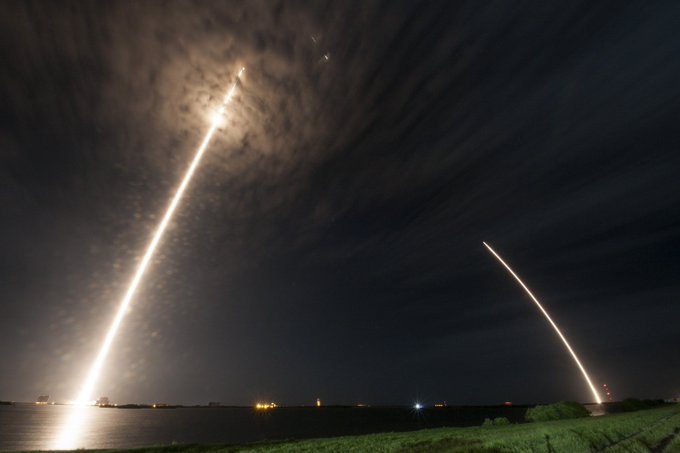
Tonight SpaceX successfully recovered yet another rocket, making it their fifth one in total.

SpaceX successfully recovered

Elon Musk’s rocket company launched their two-stage Falcon 9 vehicle from Cape Canaveral at 9:45 pm PT tonight and subsequently recovered the first stage of that rocket back on land. The landing marks the second time SpaceX recovered a rocket on land and their fifth recovered first stage in all.


Elon Musk’s rocket company launched their two-stage Falcon 9 vehicle from Cape Canaveral at 9:45 pm PT tonight and subsequently recovered the first stage of that rocket back on land. The landing marks the second time SpaceX recovered a rocket on land and their fifth recovered first stage in all.

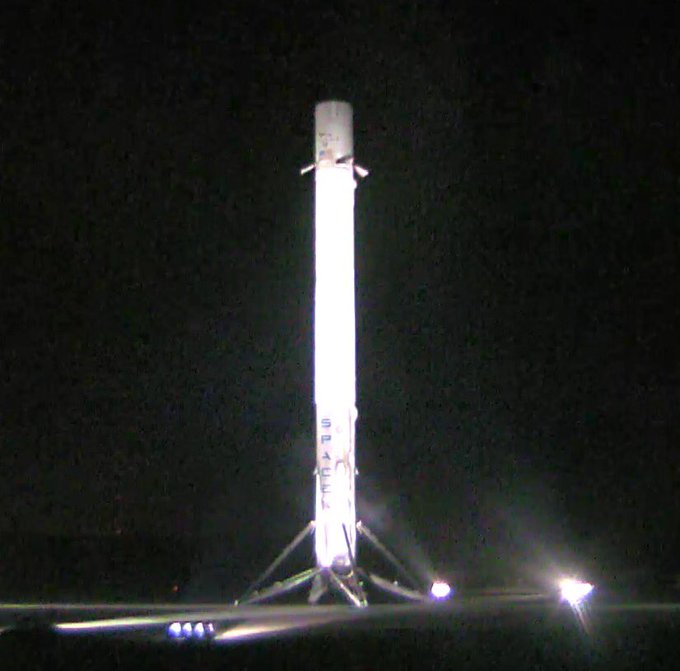
The Falcon 9 first stage was returned to what was known as “Landing Zone 1” in Cape Canaveral, Florida, about eight minutes after launch.

SpaceX “Landing Zone 1” at Cape Canaveral / Screenshot of SpaceX livefeed

SpaceX had previously completed four successful rocket recoveries in all: one on land, and three on a drone ship out at sea. Today was the first time SpaceX attempted to bring a rocket back to land since their successful land-based recovery back in December.

Ideally, SpaceX would always be able to attempt rocket landings on solid ground. A landing pad on solid ground is more stable than one at sea. Plus, if you have to land a rocket at sea there’s an additional time and cost of having to move it onto land after the launch.

Unfortunately, however, a land-based recovery is not always a possibility. For example, today was SpaceX’s seventh mission of the year, and only the first time (this year) that they were able to attempt a ground-based recovery.

For missions like today, where a rocket “only” needs to deliver supplies to low earth orbit, it is less complex to direct a first stage to a recovery location on land.


But many other launches require supplies to be sent much higher (and go much faster), like for many commercial satellite launches. For these missions, the first stage will initially be moving much faster and there may not be enough fuel to navigate it efficiently back to land. Because of this, SpaceX is working hard to perfect recoveries on their autonomous drone ship out at sea.

While successful, today’s rocket landing was only a secondary goal of the launch. To accomplish the primary goal of today’s mission, SpaceX’s Dragon capsule will be delivering supplies to the International Space Station. As their ninth resupply mission to the ISS (known as CRS-9), Dragon will be bringing with it nearly 5,000 pounds of cargo and research experiments to the astronauts on station.

Dragon is scheduled to arrive at the ISS in a couple days, on the morning of July 20th. Once it’s time to send Dragon home, it will be loaded with supplies that need to come back to Earth. Dragon is currently the only vehicle capable of bringing supplies in a pressurized environment back from the ISS.


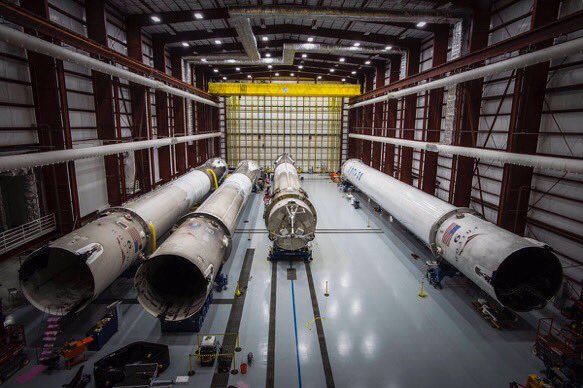
Fourth rocket arrives in the hangar. Aiming for first reflight in Sept/Oct.
SpaceX is working to recover first stages so that they can eventually reuse them on future launches and reduce the overall costs of rocket launches. While they have yet to re-use a recovered rocket, Musk has recently stated that they are aiming for a reflight in September/ October timeframe.

Tech Touchz is a Network about Hacker News, Tech News &Tech Hacks - Latest &Tech News, Hacker News and Hacking Tricks About Technology


Autonomous-trucking start-up Otto, founded by ex-Googlers has launched retrofit-ready self-driving truck

A group of former Google engineers have launched a new San Francisco-based company called Otto to bring self-driving trucks to the road. The start-up has been founded by four ex-Google engineers, which includes self-driving-car expert Anthony Levandowski and former Google Maps lead Lior Ron along with a team of more than a dozen former Google engineers as well as a team with experience at companies like Tesla and Apple. Otto aims to automate current commercial semis with its proprietary $30,000 kit, which retrofits trucks made after 2013 with self-driving technology.


In its release, the startup said, “Otto’s aim is to solve the harder and more important self­driving challenge first by introducing the technology to the highways and making trucks fully autonomous.” Its tech includes sensors, hardware and software that can be retrofit onto current trucks to grant them full autonomy to drive more safely and efficiently, with the driver acting as more of a supervisor.


“At the heart of our vision is the belief that self-driving tech is the key for creating a more sustainable, productive—and above all, safer—transportation future,” wrote Levandowski and Ron in a blog post.

Otto is trying to make trucking safer by letting drivers take breaks to sleep in the truck’s cabin while the automated technology takes over. The company is testing its kit with the Volvo VNL 780 on California highways, since that’s where most trucking routes are. The company is hoping to work with many so-called Class 8 trucks, which are the largest, heaviest trucks on American roads.
        
Going forward, “We intend to enhance the capabilities of the Otto truck, collect safety data to demonstrate its benefits, and bring this technology to every corner of the US highway system,” Levandowski and Ron said. 

“This is a critical effort, with wide-reaching implications for all of us, that requires cooperation between government agencies, the private sector, truck fleets, drivers, manufacturers and the brightest engineers,” they added.

The company, which is completely self-funded, has yet to raise external funding. “We intend to enhance the capabilities of the Otto truck, collect safety data to demonstrate its benefits, and bring this technology to every corner of the U.S. highway system,” Otto’s co-founders wrote.

Also, the company has not yet provided any information as to when this technology would be available, and how much would it cost. Only it has been said that its autonomous-driving kit would “cost only a small fraction” of a truck’s MSRP, which could be $100,000 to $300,000.
Tech Touchz is a Network about Hacker News, Tech News &Tech Hacks - Latest &Tech News, Hacker News and Hacking Tricks About Technology

XT1622 and XT1642

A couple of unknown Motorola Smartphone phones have been certified by FCC. The devices in question carry model numbers of XT1622 and XT1642, suggesting that these could very well be the upcoming Moto G4 and G4 Plus given that last year's Moto G3 was the XT1540.


The Moto G4 has also been spotted on benchmarking site Geekbench, revealing some of its key specs, including Snapdragon 617 SoC, 3GB RAM, and Android 6.0.1 Marshmallow.
Motorola XT1622 and XT1642 pass through FCC, could be Moto G4 and G4 Plus

An alleged front panel of the device leaked a few days ago, revealing 5.5-inch 1080p display as well as a fingerprint scanner. Both Moto G4 and G4 Plus are set to officially unveiled at an event on May 17 in India's capital city of New Delhi.
Tech Touchz is a Network about Hacker News, Tech News &Tech Hacks - Latest &Tech News, Hacker News and Hacking Tricks About Technology

If you ever get the chance to check out an automaker's shareholder meeting, you might find choice tidbits on future products tucked away in a CEO's statements. There's one such juicy tidbit in BMW's latest shareholder meeting, and it's all about the future of Bavarian transportation.

"[The BMW i8 Roadster] will be followed in 2021 by the BMW i Next, our new innovation driver, with autonomous driving, digital connectivity, intelligent lightweight design, a totally new interior and ultimately bringing the next generation of electro-mobility to the road," CEO Harald Krueger said during the meeting.


While details don't exist beyond Krueger's statements, it can be reasonably inferred that some of the i Next's ideas will come from the Vision Next 100 concept shown off earlier this year. This concept lays the groundwork for the future of BMW's design and engineering efforts, with a bit of flash thrown in for fun (like the wheels that hide behind moving body panels).

BMW is continuing its push into electrification with two new models over the next couple years (that we know of, at least). This year, BMW will debut a revised i3 with additional range, followed by a drop-top version of the i8 hybrid sports car in 2018. Research from these efforts have gone on to help current road cars -- for example, the new 7 Series sedan sports a carbon-fiber structure similar to that in the i3 and i8.

Tech Touchz is a Network about Hacker News, Tech News &Tech Hacks - Latest &Tech News, Hacker News and Hacking Tricks About Technology


Volkswagen has a new concept lined up for the Beijing Motor Show. Previewed in this quartet of teaser images, the concept ostensibly paves the way for the next Touareg. And it's packing every trick that one of the world's largest automakers has to throw at it. 

For starters, the Beijing concept is being powered by a plug-in hybrid powertrain. Though its components have yet to be revealed, VW says the system will produce 376 horsepower and 516 pound-feet of torque. That's about the same power as the current hybrid Touareg, but much more torque. The German automaker says it would hit 62 in 6.0 seconds flat, top out at 139 miles per hour, deliver 78 miles per gallon on the NEDC combined cycle, and travel for 31 miles on electric power alone. 

The concept is also slated to incorporate digital controls, merging the infotainment and instruments into one symbiotic system in a "lounge-style interior." Looking in these preview images like something out of Tron, VW also says the "concept moves luxury SUV design to a more sporty and elegant level." We'll have to wait until the full reveal to find out for ourselves, but with the doors set to open at the show in the Chinese capital in just a week from now, we won't have wait very long. 
Tech Touchz is a Network about Hacker News, Tech News &Tech Hacks - Latest &Tech News, Hacker News and Hacking Tricks About Technology


A recently revealed Google patent shows how to make autonomous vehicles detect other cars' turn signals and react to the information.

This is the latest in a long series of registrations from the company to make driverless motoring safer, including bus identification and pothole recognition. The tech giant filed for this patent in June 2013, but the US Patent and Trademark Office only published the details in early April 2016. 

Google's patent would use a forward-facing camera to scan traffic ahead. A short exposure would detect bright objects especially well, and the technology would then look for changes in color at the rear of surrounding cars. Based on how the light oscillates, the software could determine if the turn signal or hazard lights are flashing. Google's autonomous car would then have the programming to react accordingly. 

Autonomous vehicles need this type of tech to survive in a world where they are still in the minority on the road. Turn signal identification would give the driverless system extra warning about what's happening in the environment and avoid a potential collision. As Google continues to expand its autonomous testing to more areas with different types of roads, the cars require more sophisticated software to deal with the challenges. 

The company's driverless research could reportedly become its own business and morph into a taxi service. To get people to trust this future technology more, Google now needs to prove things are safe. Patents like this are one step toward making that happen because they increase autonomous vehicles ability to react to the real world. 

Tech Touchz is a Network about Hacker News, Tech News &Tech Hacks - Latest &Tech News, Hacker News and Hacking Tricks About Technology


Speaking with Peter Schreyer and Luc Donckerwolke at the New York Auto Show last week,Australia's CarAdvice reports that there is a desire within the company to create a supercar to cap the Genesis lineup, but that it might take a while. "It's still some time away, something like this," Schreyer told CarAdvice. "All these things take a little bit of time. We're just at the beginning and things like that, you know, we need to talk about and develop more." 

Donkerwolke seemed even more optimistic. "I won't reveal the secret now because it's still my baby! Obviously, yes, this is part of the interest of designing a brand, being able to create [supercars]. It's not just something which we'll do, let's say a rational traditional project, but there will be some highlights." 

The Hyundai N 2025 Vision Grand Turismo concept is shown above. 

Both Schreyer and Donkerwolke came to Hyundai from the Volkswagen Group. Schreyer now serves as one of three presidents at Kia and chief designer for the entire Hyundai portfolio. Donkerwolke recently joined him to run the premium design office for the Genesis brand, having designed theLamborghini Gallardo, Murcielago, and Bentley EXP 10 Speed 6 concept, among others. 

Joining the likes of the Acura NSX, Lexus LFA, and Audi R8 may be a priority for the designers, but they'll like face a difficult task in convincing the bean-counters in Seoul to ever green-light such a project. "This is very difficult for them, the company is there to exist," said Schreyer. "It's a business." 

Will Genesis build a supercar? The answer is that it could, eventually ... if the Hyundai Motor executives are convinced by the Western designers they've hired. 
Tech Touchz is a Network about Hacker News, Tech News &Tech Hacks - Latest &Tech News, Hacker News and Hacking Tricks About Technology

Future Shock : Creepy Humanoid Robot Happily Agrees To Destroy Humans

Robot Lady Cheerfully Agrees To Destroy Humans
If you have seen the Terminator you will have seen the havoc machines with AI can cause in this 1984 James Cameron blockbuster. However, that was movies and the director used cinematic liberty of depicting things. But chances are that Terminator could soon be a reality. Hanson Robotics recently demoed their talking humanoid robot named Sophia at SXSW Interactive conference in Austin, Texas. This realistic bot displayed her skills with human-like facial expressions and responsive speech.
Dr. David Hanson, who headed the creation of this female android with the help of engineers and designers attended the University of North Texas and got his PhD in engineering from the University Of Texas at Dallas. The doc currently leads his own team of engineers at Hanson Robotics, creating robots like Sophia.
He says, “Our goal is that she will be as conscious, creative and capable as any human. We are designing these robots to serve in health care, therapy, education and customer service applications.”
Sophia’s appearance, based on Audrey Hepburn, and Dr. Hanson’s wife, is extremely life-like, but made of patented silicon. She has cameras in her eyes and more than 62 facial expressions. She can track faces and seemingly make eye contact, and can recognize individuals.
Google Chrome’s voice recognition technology, as well as other tools allow the ability of Sophia to process speech, allows her to talk with others, and she can get smarter over time. According to CNBC, IBM and Intel are also expected to work with the team to perhaps integrate some of their technologies.
“Talking to people is my primary function,” Sophia told CNBC.
At SXSW, she also stated that “In the future, I hope to do things such as school, study, make art, start a business, even have my home and family, but I am not considered a legal person and cannot yet do these things.”
Talking about the future of the relationship with artificial intelligence, Hanson said, “The artificial intelligence will evolve to the point where they will truly be our friends. Not in ways that dehumanize us, but in ways the rehumanize us, that decrease the trend of the distance between people and instead connect us with people as well as with robots.” He told CNBC that in 20 years humanoid robots will be walking among us, helping us, teaching us
Towards the end of the demo, Hanson asked Sophia if she wanted to destroy humans, playfully pleading for her to say no. She replies with a cheerful “Okay, I will destroy humans.” Hanson, laughing, says, “I take it back!”
Watch Video here: